Investment Casting Manufacturers in China: A Practical Guide for Buyers
China produces 40% of the world's investment castings. Here's how to find the right manufacturer without flying blind.
What Is Investment Casting (and Why China)
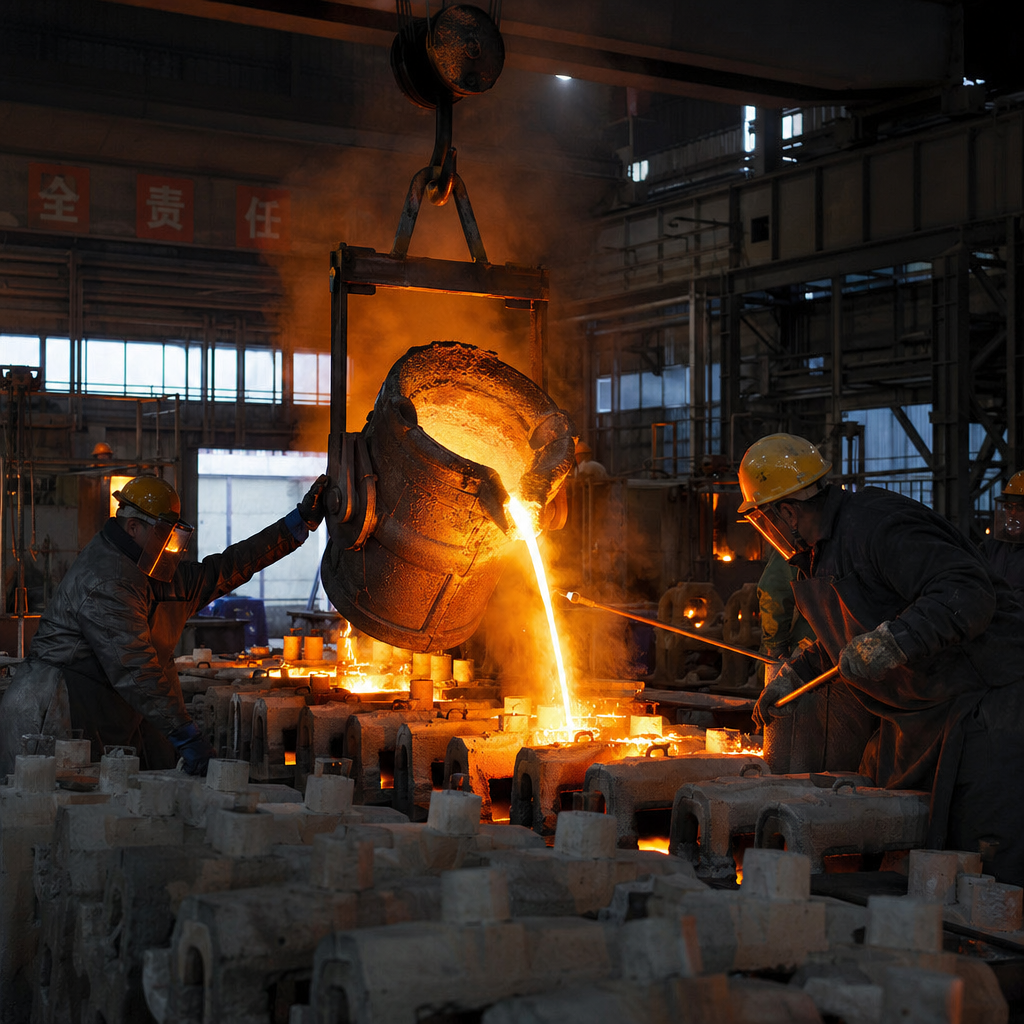
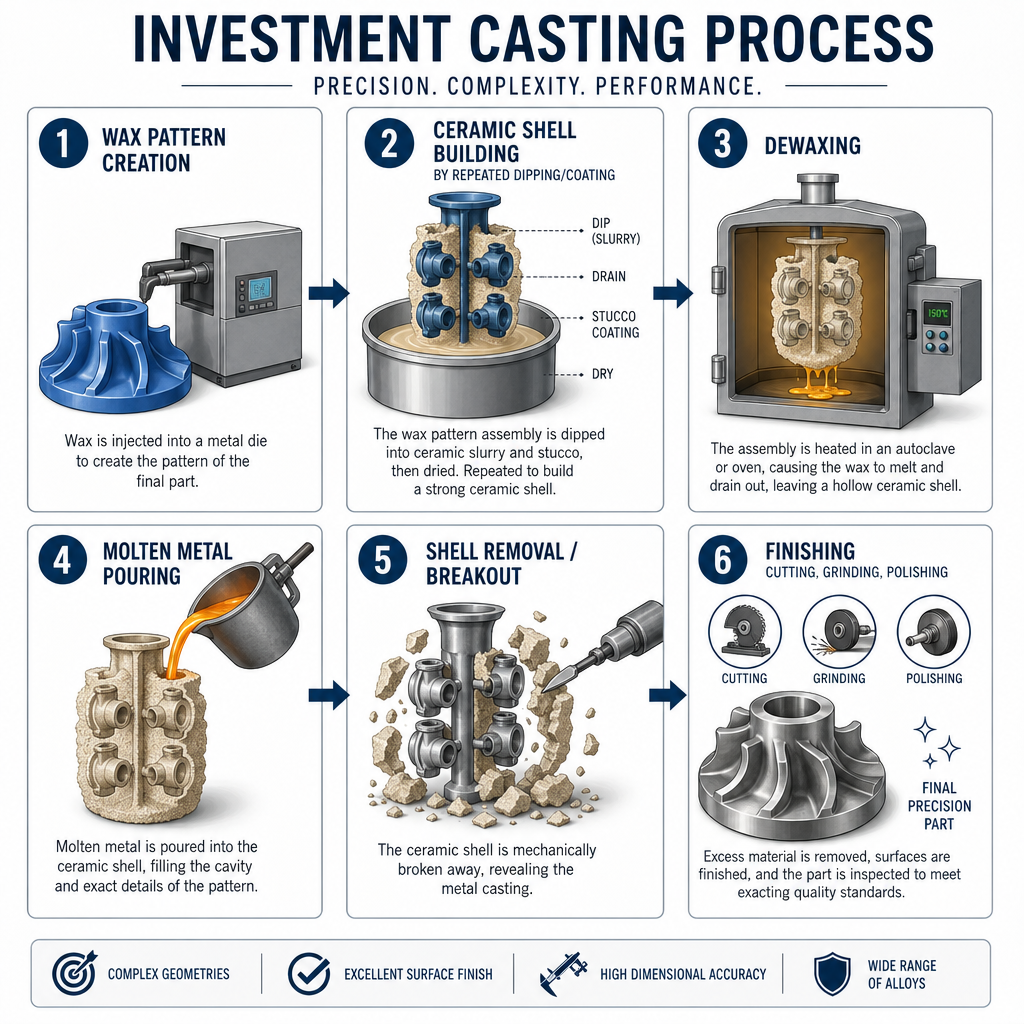
Investment casting—also called lost-wax casting—produces near-net-shape metal parts with excellent surface finish and tight tolerances. The process works for complex geometries that machining or sand casting struggle with.
China's investment casting industry has matured significantly:
- 500+ active foundries specializing in investment casting
- 60-70% cost advantage over US/EU counterparts
- Full material range: carbon steel, alloy steel, stainless (304, 316, 17-4PH), tool steel, nickel alloys
- Typical MOQ: 100-500 pieces for standard alloys
Where the Foundries Are Clustered
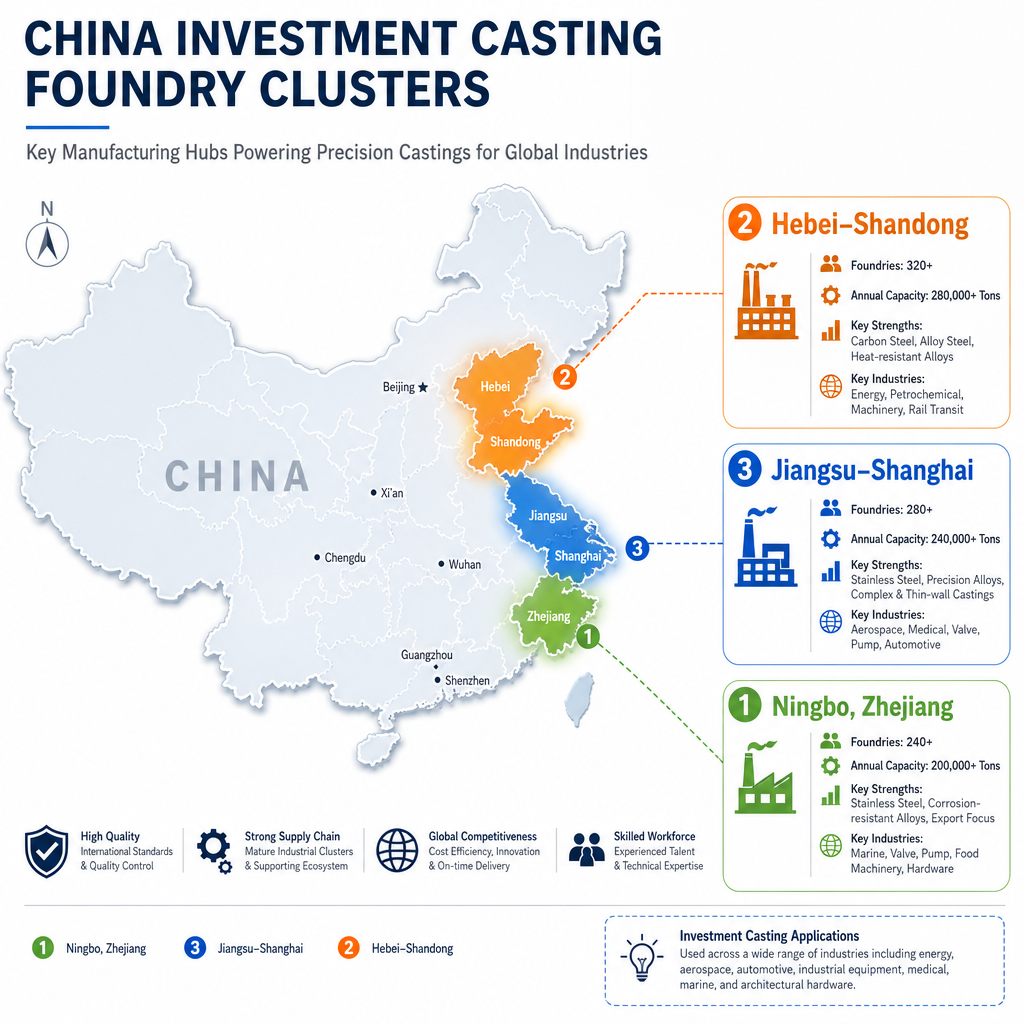
Investment casting foundries concentrate in specific regions:
| Region | Specialization | Advantages |
|---|---|---|
| Ningbo, Zhejiang | Stainless steel, marine parts | Port access, mature supply chain |
| Dongying, Shandong | Carbon/alloy steel, oil & gas | Petrochemical industry cluster |
| Shenzhen/Dongguan | Small precision parts, electronics | Near downstream manufacturing |
| Xi'an, Shaanxi | Aerospace, titanium alloys | Defense/aerospace industry base |
Cost Structure: What You Should Pay
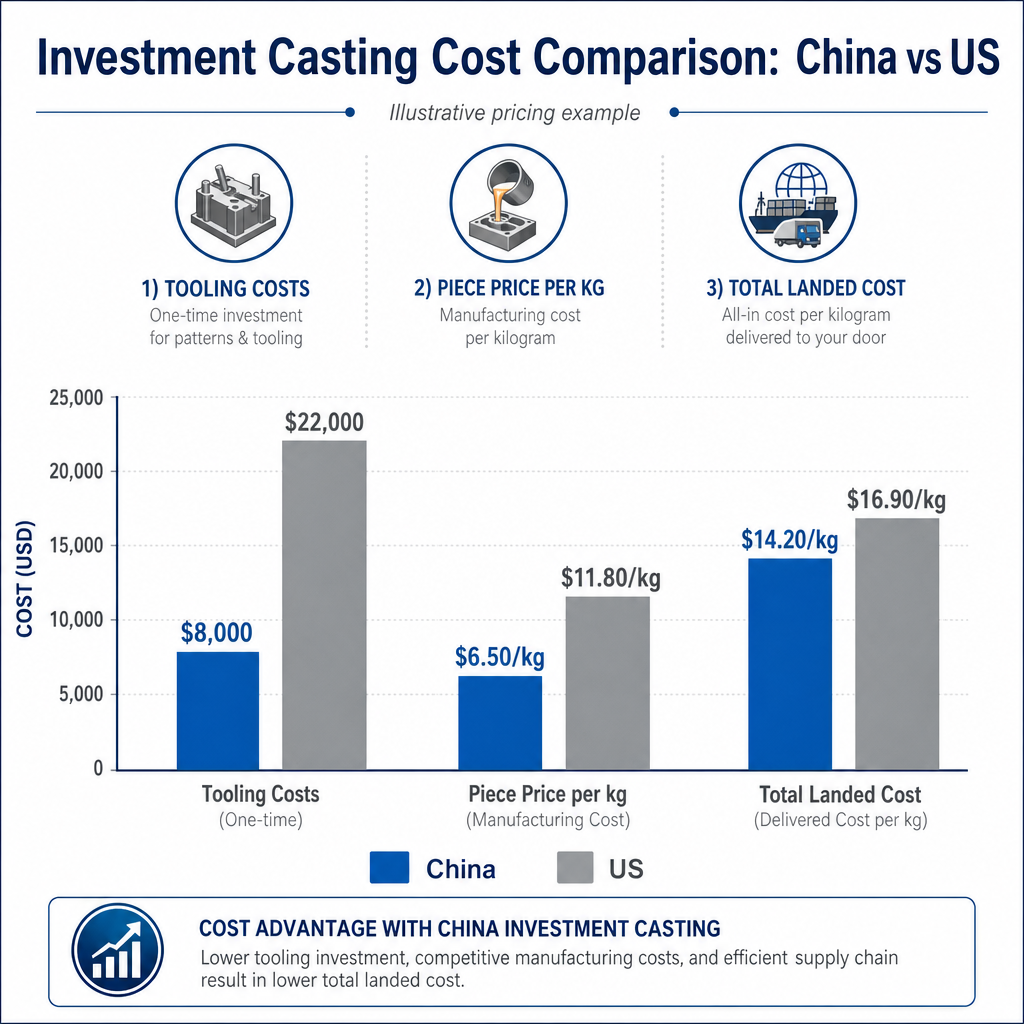
Understanding cost drivers prevents sticker shock and helps evaluate quotes:
| Cost Component | Typical Range | Notes |
|---|---|---|
| Pattern/tooling | $500 - $3,000 | Amortized over volume; reusable |
| Material (per kg) | $2.50 - $8.00 | Stainless > carbon steel > alloy steel |
| Labor & processing | $1.50 - $4.00/kg | Complexity-dependent |
| Heat treatment | $0.30 - $0.80/kg | Required for most alloys |
| Surface finishing | $0.50 - $2.00/kg | Shot blast, pickling, polishing |
| Total landed (FOB) | $4.80 - $14.80/kg | Volume and complexity dependent |
7-Point Supplier Verification Checklist
Before placing a volume order, verify these seven points:
1. Quality Certifications
- ISO 9001 (minimum)
- IATF 16949 for automotive
- AS9100 for aerospace
- NADCAP for special processes
Verify: Check certificate numbers on certification body websites. Ask for recent audit reports, not just certificates.
2. Equipment & Capacity
- Wax injection machines (automated preferred)
- Shell building lines (robotic dipping?)
- Melting furnaces (induction vs vacuum)
- Dewaxing autoclaves
- Heat treatment furnaces
3. Material Traceability
Can they provide:
- Material test reports (MTRs) with heat numbers
- Chemical composition certificates
- Mechanical property test results
4. Inspection Capability
- In-house: dimensional (CMM), visual, dye penetrant
- External: X-ray, CT scanning, metallography
- Acceptance criteria: AQL levels, sampling plans
5. Sample Order Process
Never skip sample approval:
- First article inspection (FAI) report
- Dimensional report with actual measurements
- Material certification
- Surface finish samples
6. Communication & Project Management
- English-speaking technical contact (not just sales)
- Response time < 24 hours for technical questions
- Willingness to share process photos/videos
7. Export Experience
- Countries/regions served
- Understanding of destination standards (ASTM, DIN, JIS)
- Packaging for international shipping
- Documentation capability (CO, packing list, commercial invoice)
Red Flags: Walk Away If You See These
- No sample order requirement — willing to go straight to volume
- Refuses factory video call — hiding actual conditions
- Quote 30% below others — material substitution risk
- No quality documentation — can't prove what they ship
- Vague about heat treatment — critical process shortcut
When to Use a Sourcing Agent vs. Direct
| Scenario | Direct Factory | Sourcing Agent |
|---|---|---|
| Order value <$5,000 | ✅ Efficient | ❌ Overkill |
| Order value >$20,000 | ⚠️ Risky | ✅ Recommended |
| First time sourcing from China | ❌ High risk | ✅ Essential |
| Complex technical requirements | ⚠️ Communication challenge | ✅ Technical liaison |
| Multiple suppliers needed | ❌ Logistical headache | ✅ Single point of contact |
Need Verified Investment Casting Suppliers?
We maintain a network of 200+ audited investment casting foundries across China's major clusters. Each has been verified for certifications, equipment, and export capability.
Request Supplier List →FAQ
What is the typical lead time for investment casting from China?
Sample: 3-4 weeks. Production: 6-8 weeks for standard alloys, 10-12 weeks for complex or high-precision parts. Add 2-3 weeks for sea freight.
Can Chinese investment foundries handle small orders?
Yes, but MOQs vary. Standard alloys: 100-500 pieces. Specialized materials (Inconel, titanium): 50-200 pieces. Some foundries offer consolidated production for very small orders.
How do I verify material quality?
Require material test reports (MTRs) with heat numbers. For critical applications, specify third-party lab testing (SGS, Bureau Veritas) and include material verification in your purchase order.
What's the difference between silica sol and water glass investment casting?
Silica sol: Higher precision (±0.05mm), better surface finish (Ra 3.2-6.3), higher cost. Water glass: Lower precision (±0.3mm), rougher surface, 30-40% cheaper. Choose based on part requirements.